No plant claim
This service does not describe a factory it owns, a tonnage it rolls, or a crew it employs on your slab.
FREE sourcing support
Eligible first orders may receive up to 3% sourcing support.
Eligibility applies to qualified business buyers and is confirmed after we review your product, quantity, destination, and sourcing requirements.
CoreField Sourcing helps business buyers prepare and compare alternative building quotations. The desk is not a steel mill, not a builder of record, and not a stand-in for any brand a buyer typed into search. Work starts when the brief names the use and the commercial boundary. An illustrative input, not a completed project, quotation or approved design, is a 80 ft by 120 ft warehouse, 22 ft eave height, 30 ft bay spacing, 80 ft clear span, design live load 20 psf, design dead load 5 psf, collateral load 3 psf, design wind speed 120 mph, wind exposure category C, ground snow load 25 psf, seismic design category C, and an insulated metal panel target of R-19 at the roof.
Review RFQ Checklist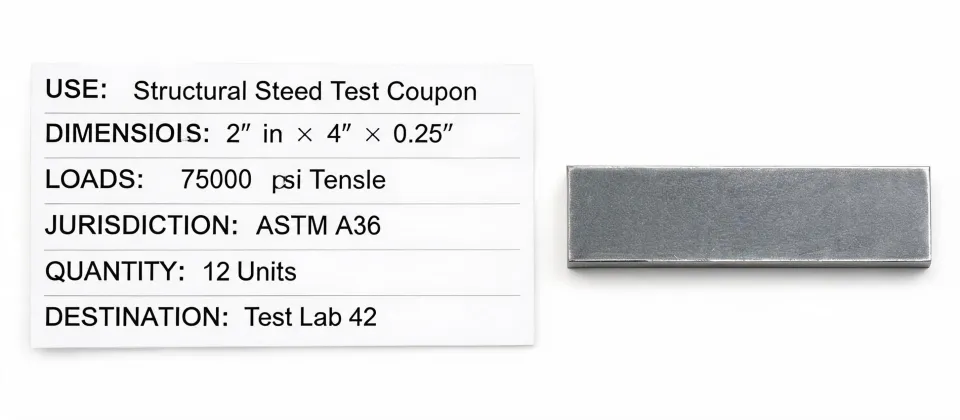
If the buyer arrived from a brand query, the reference system is recorded as a comparison note. The note does not authorize anyone to supply that brand, and it does not become the legal name of this service.
Footprint and eave height may be known while ground snow load is not. Open lines stay open. Inventing a wind speed to make a form look complete would make the later quotations incomparable. When the buyer does know the site, the brief can carry numbers such as design wind speed 115 mph, wind exposure category C, ground snow load 30 psf, seismic design category B, a 20 ft eave height and 25 ft bay spacing. Those figures stay labeled as buyer inputs. They are not a code approval.
Drawings, calculations, material descriptions and a list of exclusions are requested together. A certificate is filed only when it names the quoted system, the plant and the project jurisdiction.
Currency, per-building or whole-order basis, freight, tax and erection are lined up before anyone comments on which number is higher. An optional buyer budget is stored as a preference, not as a target the supplier must hit.
CoreField Sourcing can chase missing answers. Acceptance of a frame, a panel, a schedule or a contract remains with the buyer and the professionals they appoint. The desk does not sign shop drawings.
This service does not describe a factory it owns, a tonnage it rolls, or a crew it employs on your slab.
There is no dealer appointment to display, and none will be implied by a similar frame photo.
IBC, IRC, HUD Code and local amendments are identified when relevant. They are not pre-cleared by a web page.
A site-built steel building, a modular building and a HUD Code home follow different approval paths. Those paths are not blended to simplify a quote.
Shell, delivered, installed and turnkey remain four labels. A percentage off a market is not calculated here.
Projects published by other companies stay theirs. This desk reports the brief you submit and the responses suppliers actually return.
If use, dimensions, loads, jurisdiction, quantity and destination are partly known, send the known parts and mark the rest unknown. The comparison can begin from that honest list.
Request Factory Quotes Open the roadmap